Complete Streets For All
Complete Streets are about designing streets that work for everyone, whether you walk, bike, roll, use public transportation, or drive.
At its core, Complete Streets is a planning, design, and operational approach that centers safe mobility for all users, regardless of how they travel. But it’s more than a set of design standards — it’s a movement.
Why Complete Streets?
Safety
Health
Access to Opportunities
Economy and Small Business
Environment
Quality of Life
Better For All
A National Movement: The Future of Mobility
Local Impact
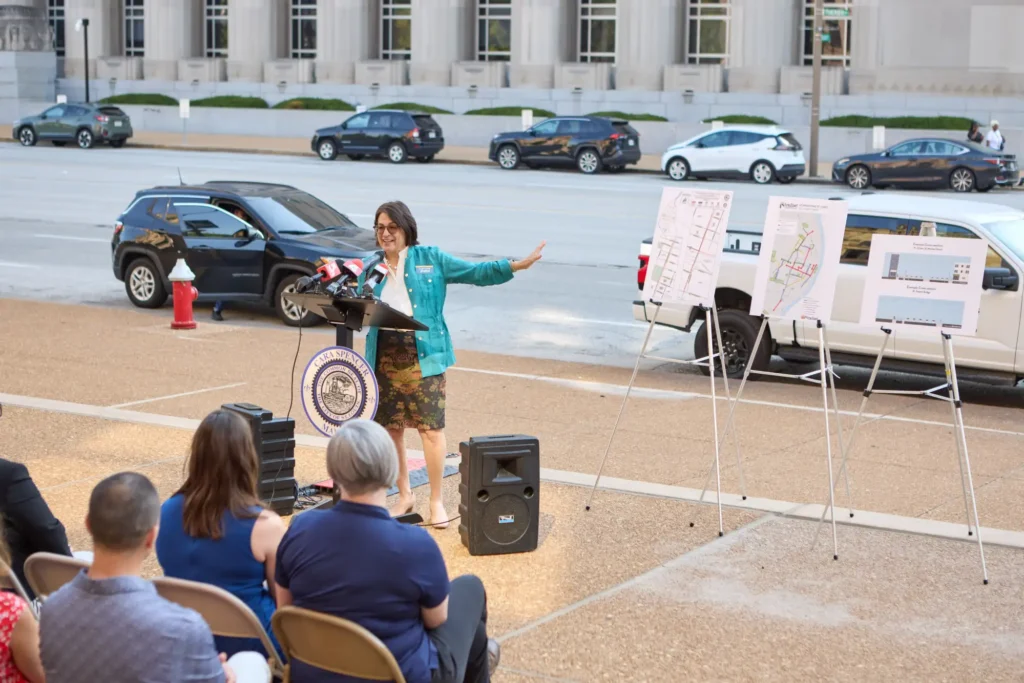
In 2024, the City of St. Louis updated its Complete Streets policy, committing the City to:
“Develop and maintain a safe, reliable, efficient, integrated, accessible, and interconnected multimodal transportation system that shall equally promote access, safety, and health for all users.”
The new policy requires:
Together, these requirements help move Complete Streets from policy into practice, shaping how transportation projects are delivered across the city.
What is Traffic Calming?
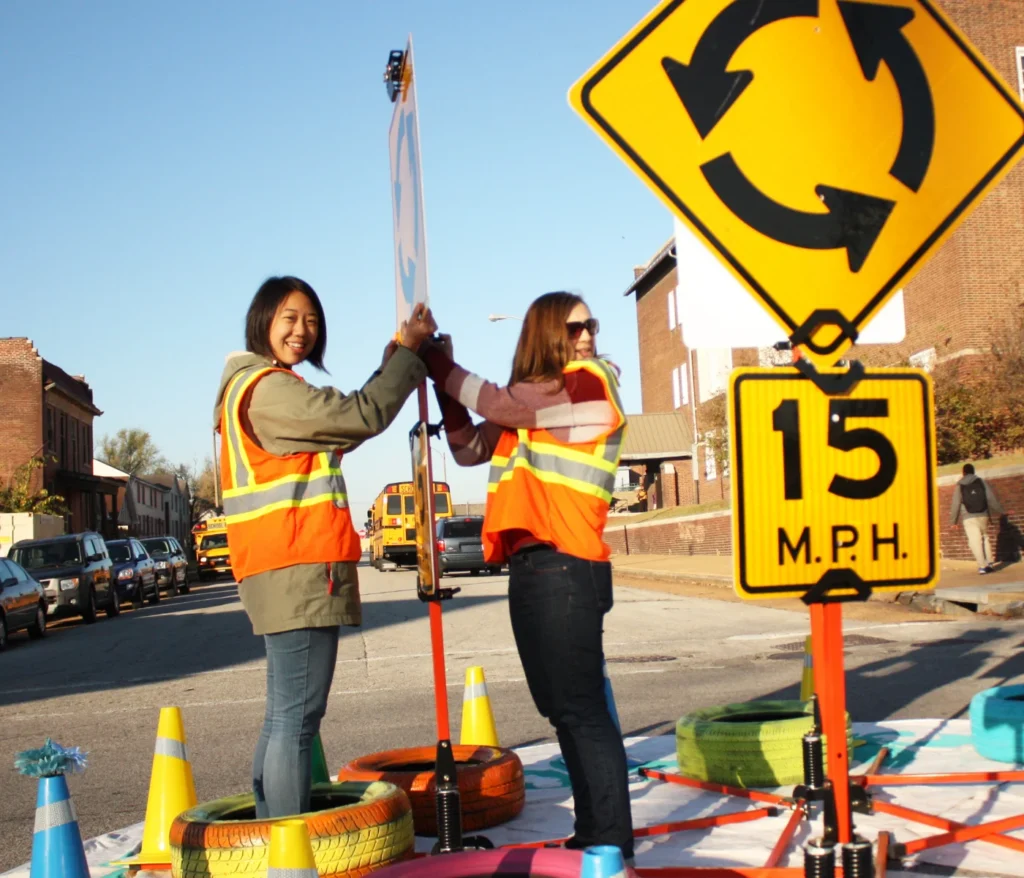
Traffic calming refers to physical changes to streets that slow and redirect motor vehicle traffic, improving safety and comfort for all street users.
We physically alter our streetscape to communicate different messages to drivers. The 21 traffic calming tools used by the City of St. Louis are generally trying to communicate the following three things:
The new policy requires:
- Drive Slowly
- Drive Carefully
- Drive Elsewhere
Below we will briefly and basically explain what the most common traffic calming tools used by the City of St. Louis are and how they encourage safer driver behavior. We’ll also go over seven “More Tools” that can be used to complement and strengthen the effectiveness of the other 21.
Traffic Calming is all about influencing driver behavior
Drive Slowly
We know that speed kills. In residential neighborhoods, business districts, and other places with high pedestrian and cyclist traffic, it’s important that people drive slowly. The following tools make it uncomfortable for drivers to go any faster than 15-25 mph.
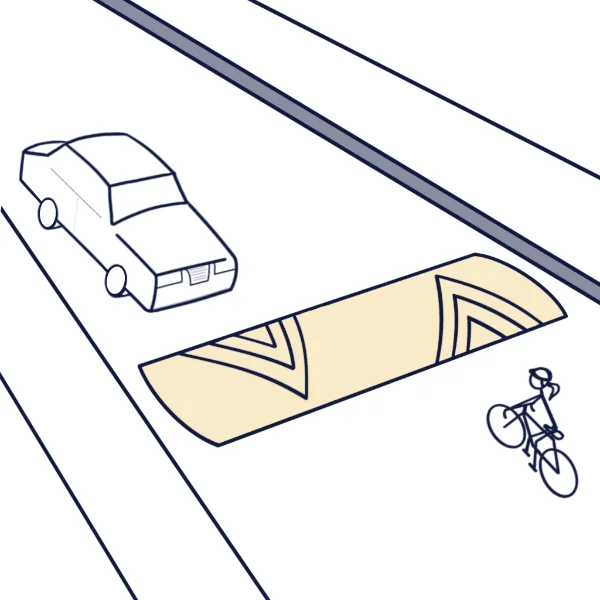
Speed Humps
One of the most common traffic calming tools, a speed hump (not bump!) is a gently risen section of pavement across the whole width of the road that slows drivers to speeds of 15-20 mph.
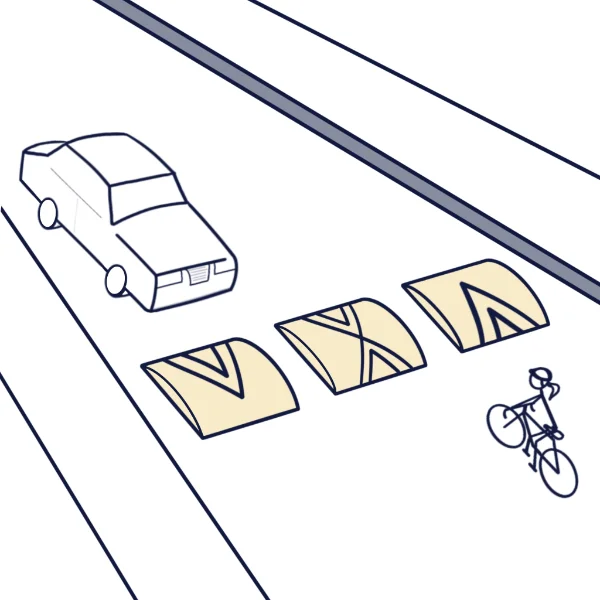
Speed Cushions
A speed cushion is a speed hump with wheel cutouts that allow emergency vehicles to pass through more easily, while still slowing other drivers to speeds of 15-20 mph.
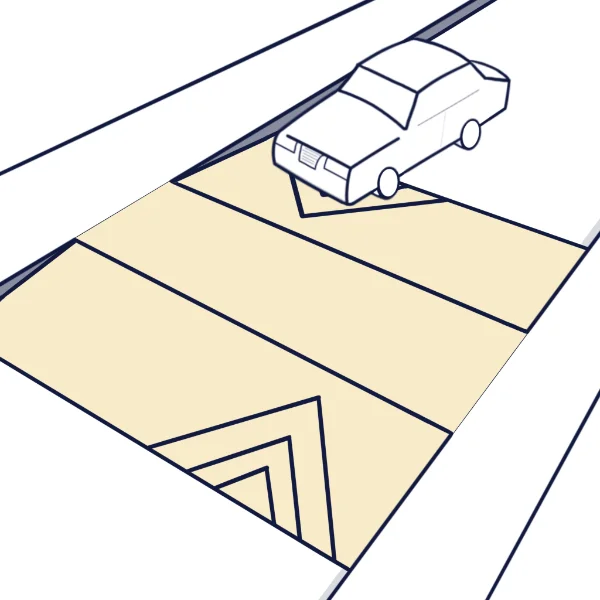
Speed Tables
A speed table is longer and smoother than a speed hump, with a flat top. Because the change in the road is more gradual, speed tables can be comfortably crossed at 20-25 mph.
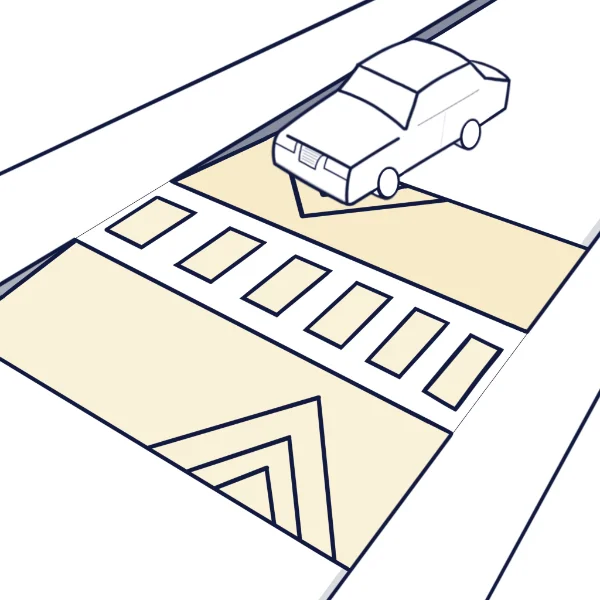
Raised Crosswalks
A raised crosswalk is a speed table that is flush with and connects to a sidewalk on either end, with a painted crosswalk on its flat surface. These both slow drivers down AND create safer, more visible crossing opportunities for pedestrians.
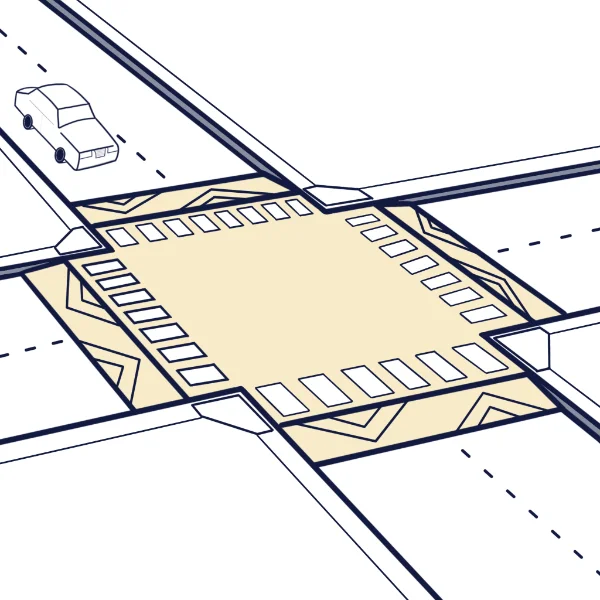
Elevated intersections
An elevated intersection turns an entire 4-leg intersection into a speed table. The center and the pedestrian crossings are all raised to the height of the curb, forcing drivers to slow down and making pedestrians easier to spot.
Rubber Speed Bumps
A rubber speed bump is a small, budget-friendly speed hump that is used in City alleys to reduce speeding or discourage cut-through traffic.
Drive Carefully
People often drive recklessly when long, wide, empty roads make them feel too comfortable. The tools below change how a road looks, functions, and feels to encourage safer driving. We group them into two categories: (1) things that can be added to intersections and (2) things that can be added “mid-block” (in between intersections).
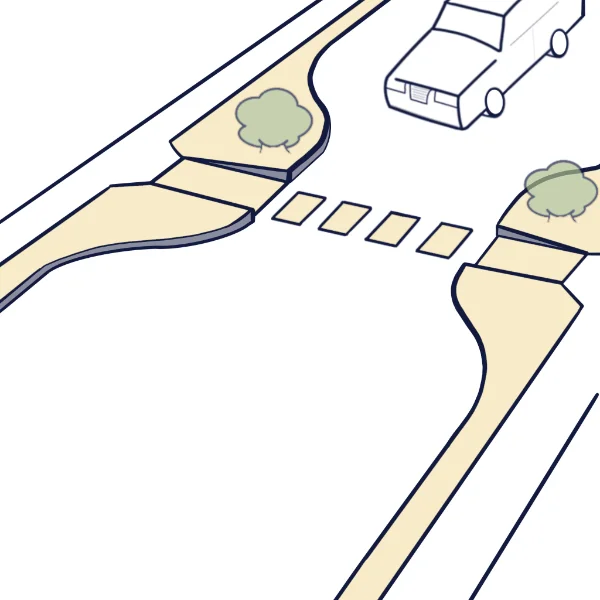
Curb Extensions
A curb extension, or “bump-out”, physically narrows the road at an intersection, reducing the distance that pedestrians need to cross the road and increasing pedestrian visibility (“daylighting”).
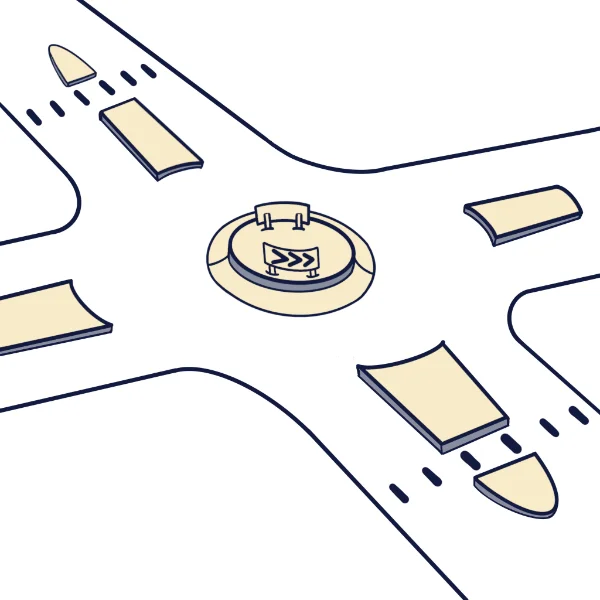
Roundabouts & Mini-roundabouts
When roundabouts are installed at intersections, they force vehicles to move slowly in a counterclockwise circle around a center island. A mini-roundabout is a smaller, flatter version.
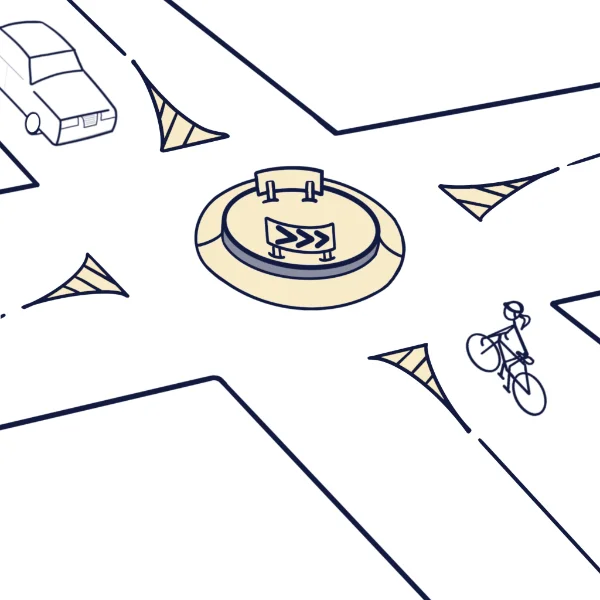
Traffic Circles
A traffic circle is an intersection where cars move around a center island and must stop or yield before entering. They take up less space and are often used as quick, low-cost improvements on neighborhood streets.
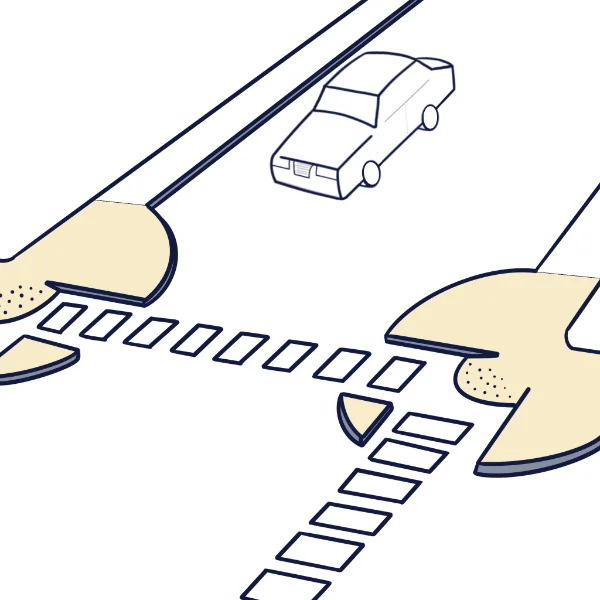
Corner Radius Reduction
A corner radius reduction makes the corner of an intersection tighter, so there’s less room for cars to turn quickly and more protected space for pedestrians.
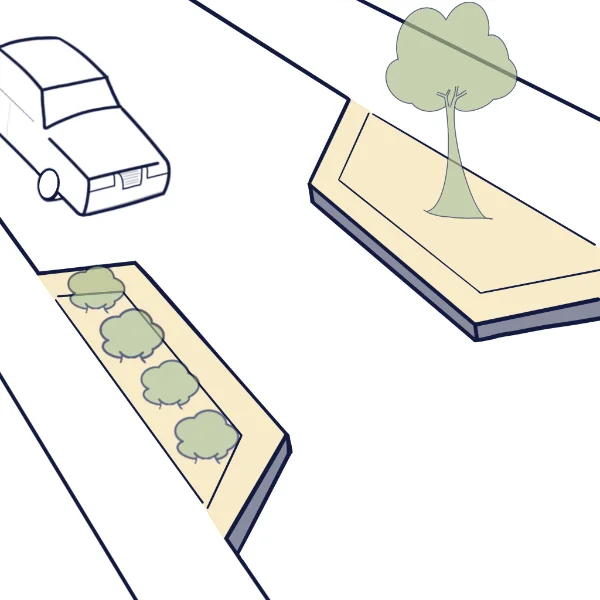
Choker
A curb extension, or “bump-out”, physically narrows the road at an intersection, reducing the distance that pedestrians need to cross the road and increasing pedestrian visibility (“daylighting”).
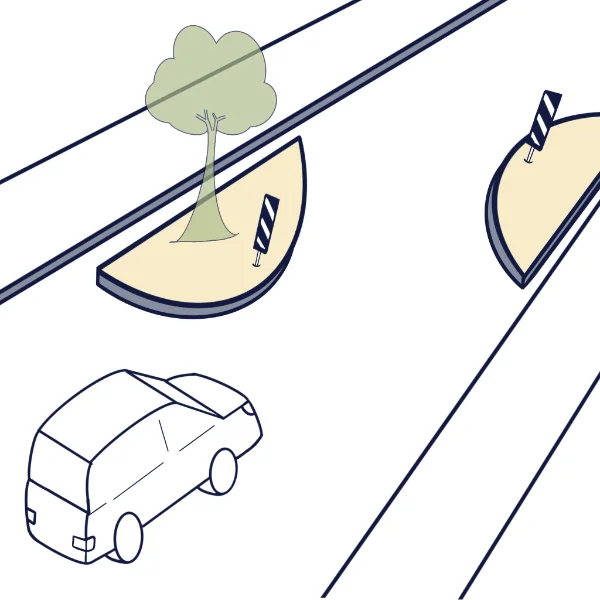
Chicane
A set of deliberate curves or zig-zags in the road that force drivers to slow down, a chicane makes drivers less comfortable driving recklessly.
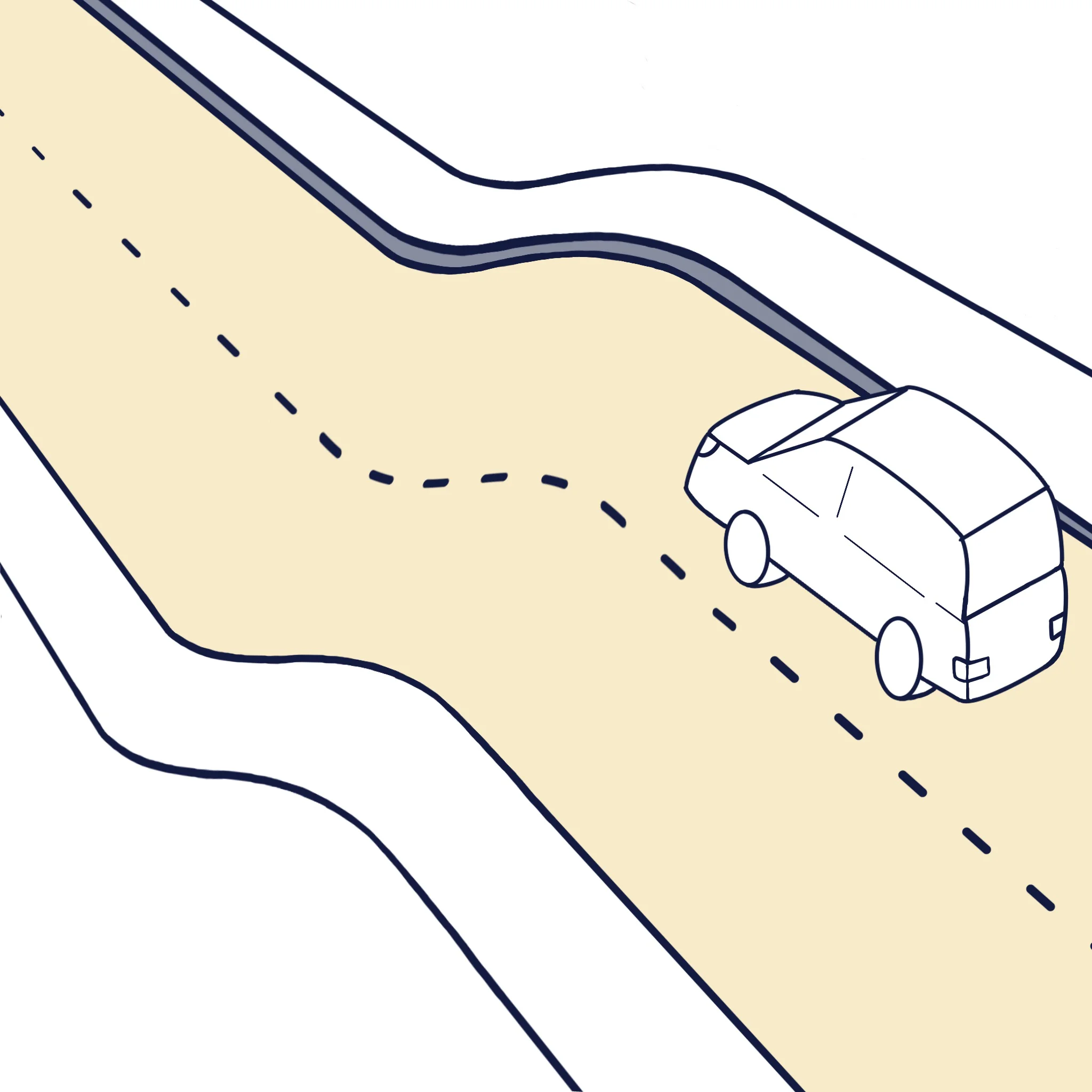
Lateral Shift
A simplified version of a chicane, a lateral shift is a sideways shift in the driving lane that makes cars change direction slightly instead of driving straight through.
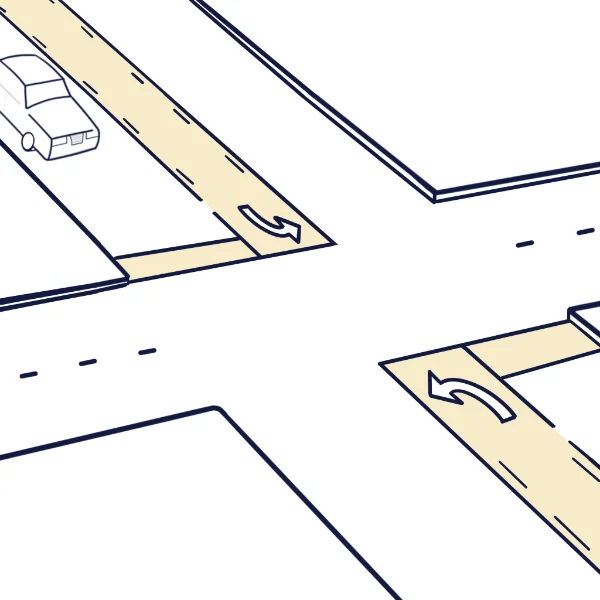
Road/Lane Diet
A road/lane diet removes or narrows driving lanes so the extra space can be used for things like bike lanes, street parking, or wider sidewalks. This helps slow down traffic and makes the street safer for everyone.
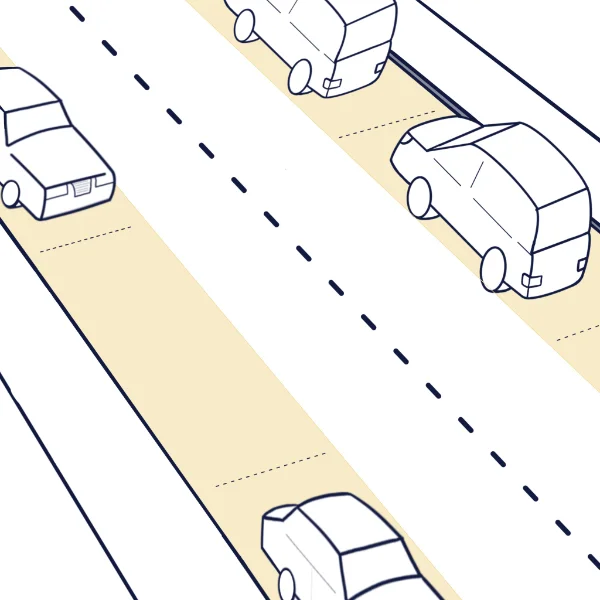
On-Street Parking
An elevated intersection turns an entire 4-leg intersection into a speed table. The center and the pedestrian crossings are all raised to the height of the curb, forcing drivers to slow down and making pedestrians easier to spot.
Rubber Speed Bumps
A rubber speed bump is a small, budget-friendly speed hump that is used in City alleys to reduce speeding or discourage cut-through traffic.
Drive Elsewhere
When data shows that drivers still aren’t slowing down despite existing traffic calming, it may be necessary to redirect traffic. These tools control where drivers can and can’t go, and must be designed to avoid harming pedestrians, cyclists, and emergency access.
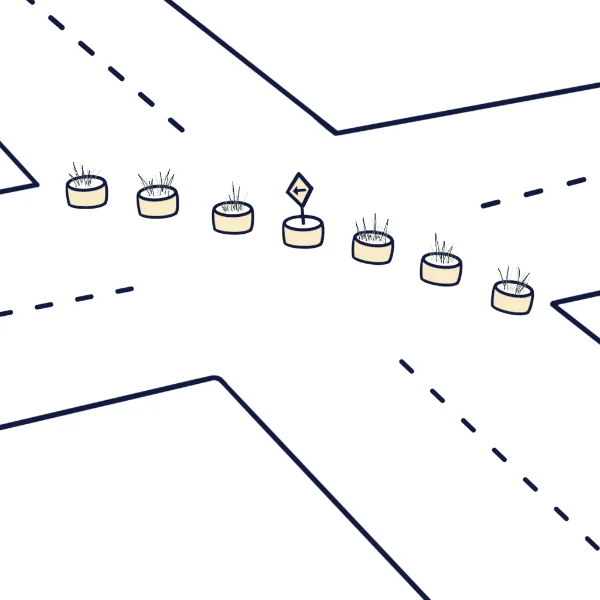
Diagonal Diverters
Barriers are placed diagonally across a four-legged intersection, eliminating all but one possible route for drivers going each direction.

Full Closure
Barriers are placed across the full width of a roadway. This discourages drivers from making a shortcut onto of a neighborhood street.

Half Closure
Barriers are placed across half the width of a roadway (one lane), to discourage shortcut driving and lower traffic on the street.
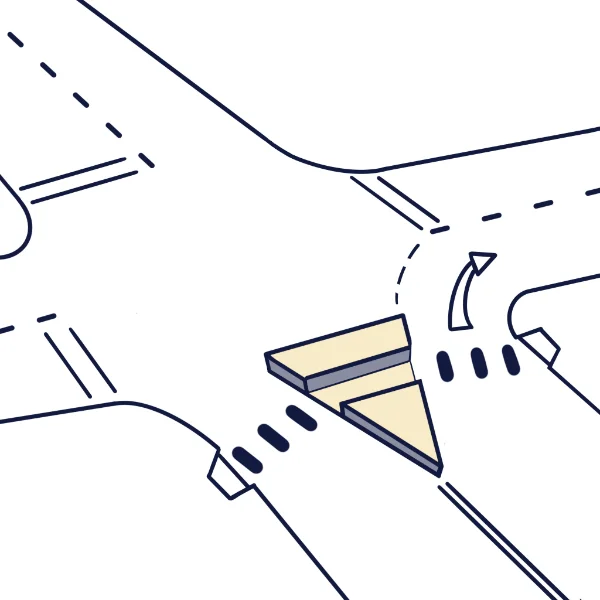
Forced Turn Island
A triangular island is placed where a roadway meets an intersection, forcing drivers to only turn right into and out of that road. This redesign limits the risk of dangerous crashes (like head-on collisions and side-impact crashes)

Median Barrier
A median is placed down the center of one roadway at an intersection, preventing left turns and cut-throughs, with openings that allow people biking to pass through safely.
More Tools
The 21 tools listed above have proven especially effective at changing driver behavior, but they can always be enhanced. What’s safer than a raised crosswalk? A raised crosswalk with flashing beacons.

Pedestrian Refuge Island
A pedestrian refuge island is a raised island median with a gap for a crosswalk. It splits crossing distances in half, providing a protected space in the middle of the road.

Rectangular Rapid Flashing Beacon
Installed at crosswalks, these person-activated signs have flashing lights that signal drivers to yield.

Pedestrian Hybrid Beacon
Installed mid-block on roadways where it’s difficult for pedestrians to cross, these person-activated overhead signals show drivers a red light.
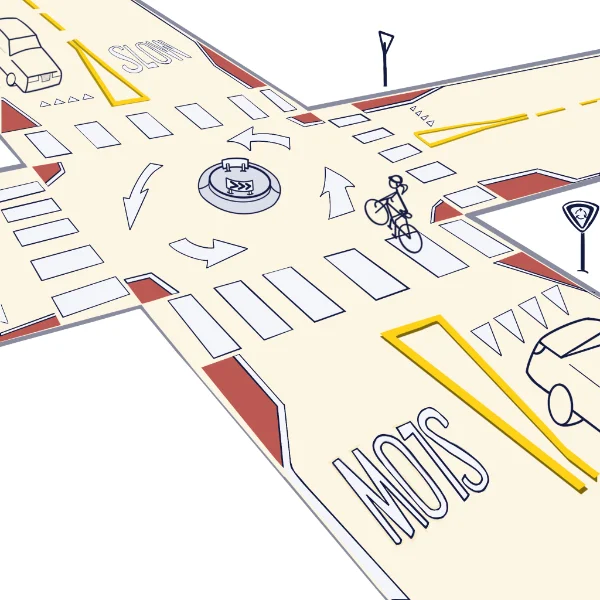
Enhanced Striping
Additional paint markings in the roadway can convey special information to drivers, i.e.: high-visibility crosswalks, green bicycle lanes, “Calm Street” or “School Crossing” roadway text, etc.
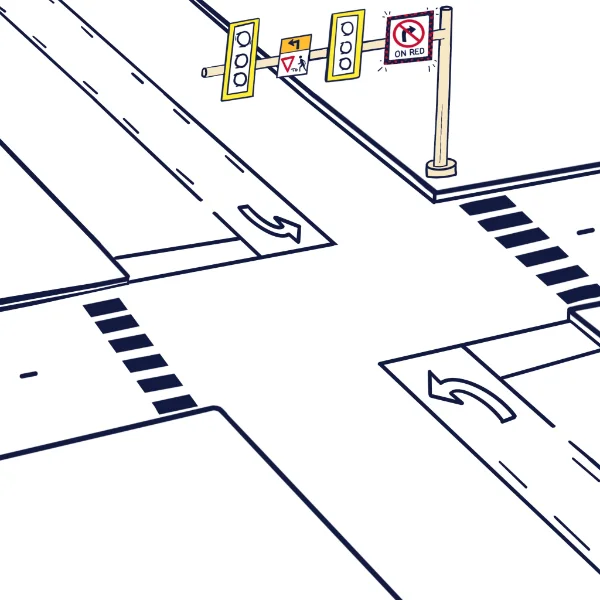
Enhanced Signage
Unique or enhanced signage can guide roadway users to make safer decisions, i.e.: additional warning signs, dynamic radar speed signs, specially reflective signs, etc.
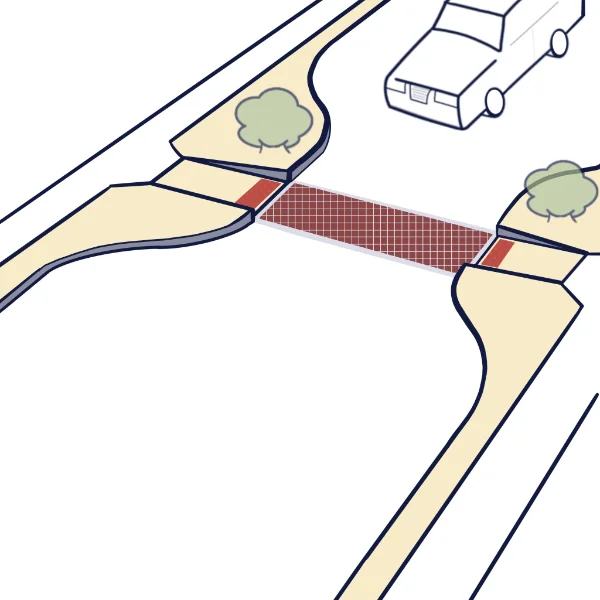
Textured Crosswalks
Traditional paved crosswalks can be replaced by or supplemented with bricks/pavers in order to more effectively distinguish pedestrian crossings from the rest of the roadway.
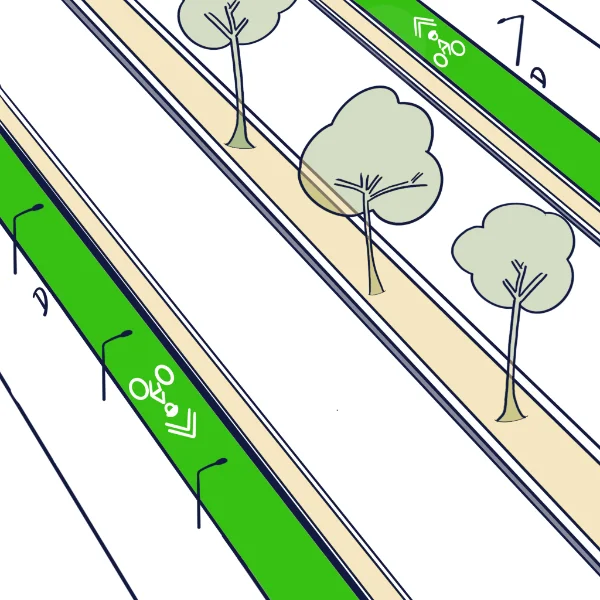
Streetscaping
Street design, art, and landscaping can combine to transform a road into a more vibrant and welcoming place for all users, and can encourage slower driving.
Get Involved
Economy and Small Business
In the City of St. Louis, reach out to your alderperson about street and sidewalk concerns, upcoming transportation projects, or transportation-related policies. Constituent input plays an important role in shaping how projects move forward.
Click here to find your Alderperson.
Attend Public Meetings
Attend Board of Aldermen meetings (in person or virtually) especially meetings of the Public Infrastructure and Utilities Committee, to keep up on current projects, board bills, and resolutions related to transportation.
Connect With Community Groups
Neighborhood associations, community development corporations, and local advocacy organizations are great places to meet other residents and discuss transportation challenges and solutions that matter most in your community. Consider contacting your local community groups.
Report Street and Sidewalk Issues
Use the Citizens’ Service Bureau to report issues like potholes, ADA accessibility concerns, damaged sidewalks, missing signage, and other infrastructure problems.