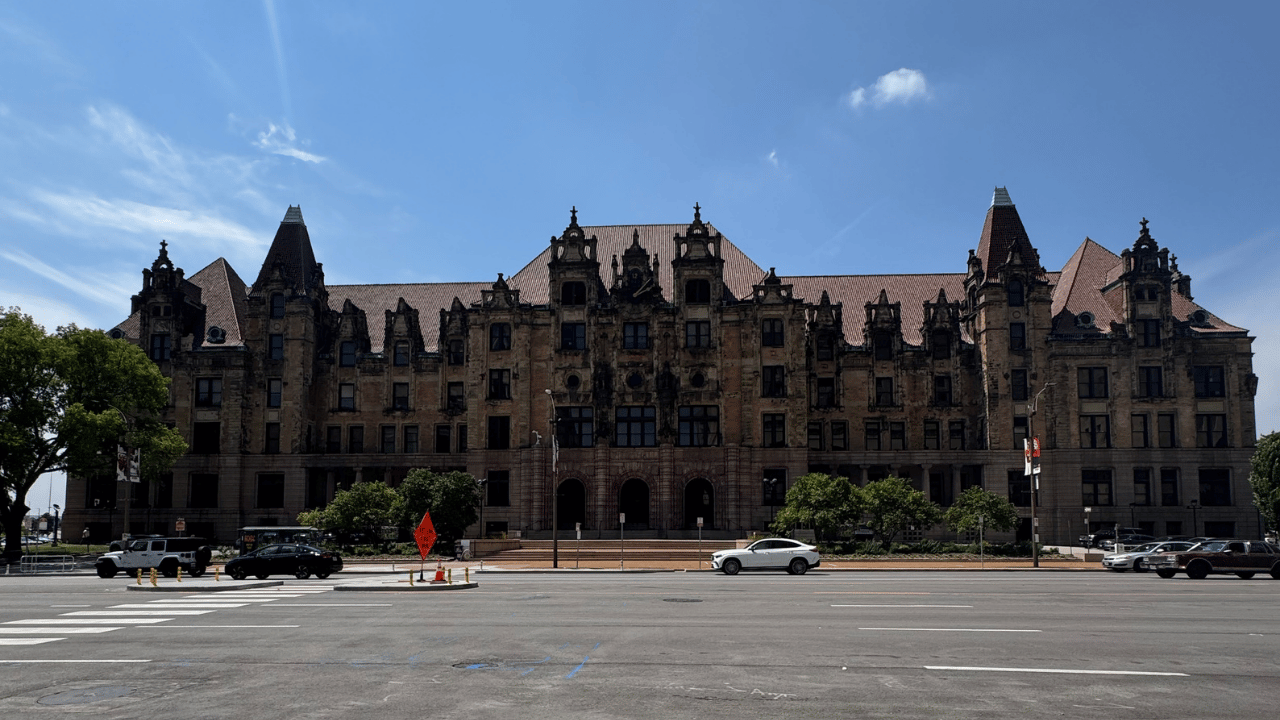
Mayor Cara Spencer recently took an important step in implementing St. Louis’ Transportation and Mobility Plan by issuing mayoral Executive Order 96. Signed on June 11, the order recently became publicly available on the City’s website. The order signals a commitment to safer, more connected streets and includes many of the priorities Trailnet has long advocated for.
We’re encouraged to see many of Trailnet’s long-standing transportation priorities reflected in the order. More importantly, Executive Order 96 signals a commitment to turning the Transportation and Mobility Plan into action. Here’s what it means for the City of St. Louis, and why it matters for everyone who walks, bikes, drives, or uses transit.
Transportation and Mobility Plan
Executive Order 96 establishes priorities for implementing the City of St. Louis’ Transportation and Mobility Plan (TMP). But what is the TMP, and why does it matter?
Until 2025, St. Louis was still relying on the 1948 Major Streets Plan; a transportation blueprint created nearly 80 years ago. Funded through the American Rescue Plan Act (ARPA), the TMP was developed through an extensive public engagement process. More than 1,500 residents shared their perspectives through over 30 community events and engagement activities, helping shape a transportation vision that reflects the needs of St. Louisans today.
Drawing on that community input, the TMP outlines a roadmap for creating a safer, more connected transportation network. Its recommendations include reducing reliance on ward capital for infrastructure improvements, expanding the use of quick-build projects, and lowering citywide speed limits where appropriate. In November 2025, the City’s Planning Commission adopted the TMP as part of St. Louis’ Comprehensive Plan, making it the City’s guiding vision for future transportation improvements.
Executive Order 96
The TMP lays out a vision for the future of transportation in St. Louis, but a vision alone doesn’t build safer streets. Turning the plan into reality requires funding, policies, and clear implementation strategies. Executive Order 96 begins to establish that framework.
Executive Order 96 begins by acknowledging the disproportionate and inequitable impact of traffic violence on pedestrians, cyclists, older adults, and people with disabilities. It then establishes priorities that advance many of the TMP’s recommendations, including:
- Targeting safety improvements where highest crash rates occur
- Formalizing in-person walk and bike audits as part of project planning
- Developing a program to assess traffic signals, sidewalks, curb ramps, and other transportation infrastructure
- Funding pilot projects that use low-cost, quick-build traffic calming projects
We’re also encouraged to see many of Trailnet’s policy principles reflected in Executive Order 96. Specifically, the order calls to:
- Restructure the funding system St. Louis Works to go directly to departments
- Update the traffic calming policy
- Re-envision the replacement of St. Louis Sidewalks
- Restructure funding for Major Streets Program & Traffic Calming
- Lower speed limits across the city, where appropriate
- Expanding revenue opportunities for the DOT
- Update Chapter 17 of the Revised Code of the City of St. Louis
Finally, The Mayor’s Office proposes that reporting be tracked through a TMP Task Force, creating a mechanism for accountability as implementation moves forward. Taken together, the order’s priorities demonstrate the City’s commitment to improving transportation systems, modernizing policies and procedures, and turning the TMP into action.
Advocacy Actions
Executive Order 96 reflects many of the Transportation and Mobility Plan’s community-informed, data-driven recommendations. While it marks meaningful progress, there is still important work ahead. The following areas represent key opportunities for residents and advocates to help ensure the order’s priorities are fully implemented.
Public engagement
While Executive Order 96 emphasizes community engagement, we’d like to see clearer expectations around public involvement, transparency, and progress reporting. Ongoing communication will be essential to keeping residents informed, building trust, and ensuring the Transportation and Mobility Plan continues to reflect community priorities as implementation moves forward.
Department of Transportation implementation
Executive Order 96 takes an important step toward establishing the City Department of Transportation (DOT), which has the potential to transform how St. Louis plans, builds, and maintains its streets and sidewalks. By prioritizing funding for the department, the order moves the DOT closer to becoming the coordinated, well-resourced agency envisioned for its launch in 2029. In the meantime, continued advocacy will be essential to ensure the department is adequately funded and structured to reflect the successes of peer cities.
Taking action on the executive order’s priorities
Executive Order 96 gives residents a powerful tool for advocacy by clearly outlining the Mayor’s priorities for transportation in St. Louis. While the order signals the City’s intent, those priorities won’t become reality without continued action and accountability. Residents, advocates, and community organizations all have a role to play in monitoring progress and encouraging City leaders to follow through on these commitments.
The true measure of Executive Order 96 will be its implementation. Trailnet stands ready to assist the City by sharing our expertise, supporting meaningful community engagement, and advocating for the successful implementation of the Transportation and Mobility Plan. Together, we can build a transportation system that better serves everyone in St. Louis.